
Spinal decompression — for the disc pain that has not responded to anything else.
Non-surgical, computer-controlled traction therapy that reduces pressure on herniated discs and irritated nerves. Most frequently used for slipped disc, sciatica, and chronic disc-related pain — usually as part of a wider FCM treatment plan.
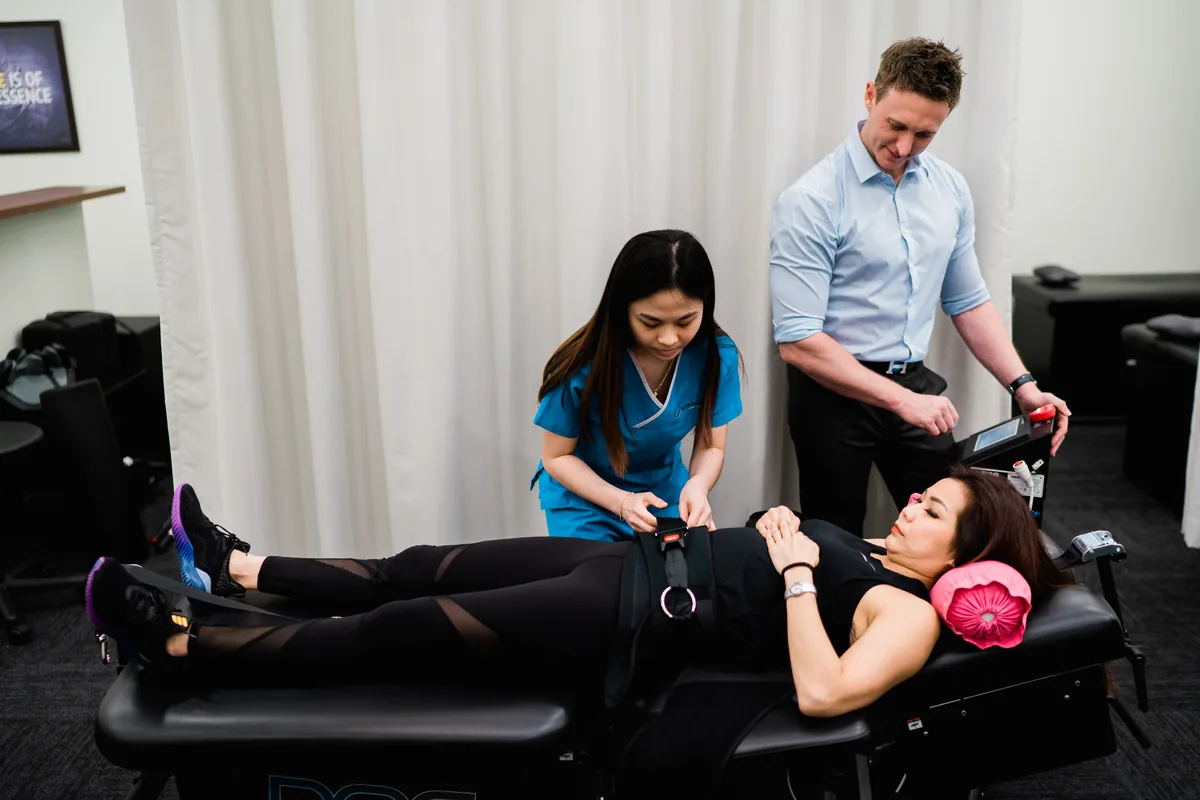
What it is
Spinal decompression is a computer-controlled traction therapy that gently stretches the spine to reduce pressure on the discs and surrounding nerves. The negative pressure created within the disc encourages retraction of herniated material and increases the flow of nutrients into the affected area to support healing.
How it works
You lie on a treatment table while a calibrated mechanical traction unit applies gentle, cycled lengthening force to the targeted spinal segment. The intensity is set per patient, per session, based on diagnosis and tolerance.
Who it is for
- Slipped disc
- Sciatica
- Spinal stenosis
- Chronic back or neck pain
- Disc degeneration
Contraindications + honest screening
Acute spinal fractures, advanced osteoporosis with vertebral fragility, abdominal aortic aneurysm, untreated spinal tumour, and pregnancy. We screen for all contraindications at the first consultation.
What a session looks like
Each session takes 20–30 minutes and is comfortable for most patients. It is non-invasive, drug-free, and requires no recovery time.
Typical treatment arc
Typically 10–20 sessions over 6–10 weeks, depending on diagnosis and response.
Where this service fits
- Spinal decompression therapy is one component of the broader Functional Correction Method — used in isolation only where a multi-modal plan is not clinically indicated.
- Each session is preceded by a brief reassessment so the treatment evolves with the patient.
- If this modality is not the right fit for your condition, we will say so at the first consultation.
Common questions.
Our patient-care team is happy to walk through anything else over the phone or WhatsApp.
Spinal decompression therapy may be helpful if you’re experiencing:
Nerve-Related Symptoms: Significant pain, numbness, weakness, or difficulty standing or walking, particularly if symptoms extend into your legs or feet.
Certain Spinal Conditions: You’ve been diagnosed with spinal stenosis, sciatica, bulging or herniated discs, or other conditions causing nerve irritation.
Limited Success with Conservative Care: Your symptoms have persisted despite trying medication, physical therapy, or other non-surgical approaches.
Confirmed Spinal Issues: Imaging tests (MRI or CT scans) have shown evidence of disc or spinal canal issues.
This treatment may not be appropriate if you have:
- Structural Spinal Issues: Spinal fractures, instability, advanced osteoporosis, or previous spinal fusion/implants.
- Complex Surgical History: Multiple unsuccessful spinal surgeries or failed back surgery syndrome.
- Pregnancy: Spinal decompression is not recommended during pregnancy.
During your consultation, we’ll thoroughly assess whether spinal decompression therapy is suitable for your specific condition and situation.
Not sure about getting spinal decompression surgery? Non surgical spinal decompression therapy may help provide relief for certain types of back pain or neck pain. Elite Spine Centres is pleased to be able to offer this cutting-edge treatment to relieve symptoms stemming from spinal nerve inflammation. Gentle, non-invasive spinal decompression therapy is a treatment that uses motorised traction therapy to safely and effectively stretch and elongate the spine. It can help reduce pressure and tension from spinal nerves and discs, relieving pain and discomfort.
By gently decompressing the spine, you can improve blood flow, nutrient exchange, and circulation to injured areas of the spine. During non surgical spinal decompression treatment, there are multiple cycles of relaxing and stretching of the spine. Each session works to gently decompress the spine, with many patients experiencing gradual improvement over the course of treatment. Nonsurgical spinal decompression therapy is performed on a table by a trained professional. A harness will be worn around the patient’s lower back, which is controlled via a computer by the physician. The computer-controlled system gently stretches the spine, creating negative pressure (decompression) that may help reduce pressure on bulging or herniated discs.
This will allow fluid, oxygen and nutrients to circulate around the spine and a reduction of pressure, promoting healing. These advanced machines include sensors that detect muscle resistance and adjust the pulling force, ensuring a more effective stretch.
Sessions are short, with multiple cycles of stretching and relaxing over 2-3 minutes within the overall 15-20 minutes session. In order for treatment to bear optimal results, most nonsurgical spinal decompression patients need multiple treatments. The average patient will need to attend treatment three times a week for four weeks – 12 sessions in all. Small improvements in pain and discomfort are often noticed by patients within a few sessions.
There are a wide variety of benefits that come from non-surgical spinal decompression therapy. These include:
- Non-Invasive: Due to its non-surgical approach, you can avoid the need for a hospital stay or anaesthesia. This reduces downtime and risk.
- Alternative to Surgery: This treatment is a great drug-free option for those dealing with chronic back or neck pain, removing the need for surgery.
- Pain Relief: Many patients experience significant pain reduction from conditions such as spinal stenosis, sciatica and herniated discs.
- Reduction in Nerve Irritation: Through gentle stretching, this treatment reduces irritation and inflammation by decompressing nerves.
- Promotes Natural Healing: The therapy can be instrumental in the retraction of herniated disc material and improving the flow of nutrients and oxygen to injured spinal discs.
- Long-Term Spinal Health: This therapy improves overall spinal function, endurance, posture and long-term help.
At the outset of your first appointment, the specialist will discuss your medical history and symptoms and will do a physical examination to check gentle, non-invasive spinal decompression therapy is right for you. Once your suitability has been established, you will be booked in for your first session. We recommend wearing comfortable clothing and staying hydrated to make the treatment more comfortable. Hydration will reduce muscle cramping and will make the treatment more effective.
During the session, a harness will be fitted around your pelvis and the table is adjusted for your height and comfort. Controlled by a computer operated by a trained specialist, the motorised table will gently pull and release your spine in cycles, helping to create negative pressure that decompresses the nerves and discs. While this is going on, you will feel gentle pressure and pulling. If you feel any pain, inform the trained specialist as this should not be occurring. The environment will be as relaxing and comfortable as possible. Over 15-20 minutes you will undergo 2-3 minute cycles of stretching and relaxing. Once your treatment is complete, your specialist will discuss the treatment with you and will recommend any aftercare procedures you should undertake.
At Elite Spine Centres, spinal decompression therapy isn’t a standalone treatment, it’s one component of our comprehensive Functional Correction Method (FCM). Our chiropractors integrate decompression with spinal adjustments, soft tissue therapy, and rehabilitation exercises to address not just your symptoms, but the underlying causes of your spinal condition. This integrated approach often produces better, longer-lasting results than decompression therapy alone.
At Elite Spine Centres, we offer non-surgical spinal decompression therapy as part of our holistic and comprehensive approach. As part of our signature Functional Correction Method (FCM), we combine decompression therapy with chiropractic practice, modern therapeutics and physical therapy exercises. This approach ensures long-lasting and sustainable pain relief and recovery.
Are you interested in having non-surgical spinal decompression therapy? Why not visit Elite Spinal Centres for an initial consultation? We will do a full review of your medical history and symptoms and a physical assessment to determine your suitability for pain free spinal decompression treatment. Don’t continue to struggle with spinal stenosis, sciatica, herniated discs or other nerve-related conditions. Discover whether spinal decompression therapy can help you find the relief you’ve been seeking.
Non-surgical spinal decompression therapy is effective for a range of spinal conditions, including:
Herniated or Bulging Discs (Slipped Disc)The disc has two main parts: an inner gel-like nucleus pulposus and an outer ring called the annulus fibrosis. Poor posture, prolonged sitting, old injuries, or spinal misalignments can cause these discs to wear prematurely, leading to discogenic pain. Spinal decompression helps retract herniated disc material, relieving nerve compression and pain.
SciaticaBy reducing pressure on the sciatic nerve, decompression therapy alleviates the pain, numbness, and tingling that radiates into the legs and feet.
Degenerative Disc DiseaseSpinal decompression slows the degenerative process, improving disc health and function by restoring hydration and nutrient flow to the affected discs.
Spinal StenosisDecompression therapy relieves symptoms of spinal stenosis by increasing space within the spinal canal.
Chronic Back and Neck PainFor patients experiencing persistent aches, sharp debilitating pain, or limited movement, non-surgical spinal decompression therapy provides targeted, drug-free relief.
Speak to a clinician about what is causing your pain.
Your first visit is a 60-minute session with a doctor — a full assessment and your first treatment in the same appointment. We take your clinical history, screen your posture and movement, explain what we find in plain language, and begin treatment if your condition is suitable for our care.