
Low-level laser therapy — supporting tissue healing without medication.
Wavelength-calibrated light therapy used to reduce inflammation and accelerate the body's natural healing process. Non-invasive, drug-free, and painless. Typically used in combination with manual therapy and decompression — rarely on its own.
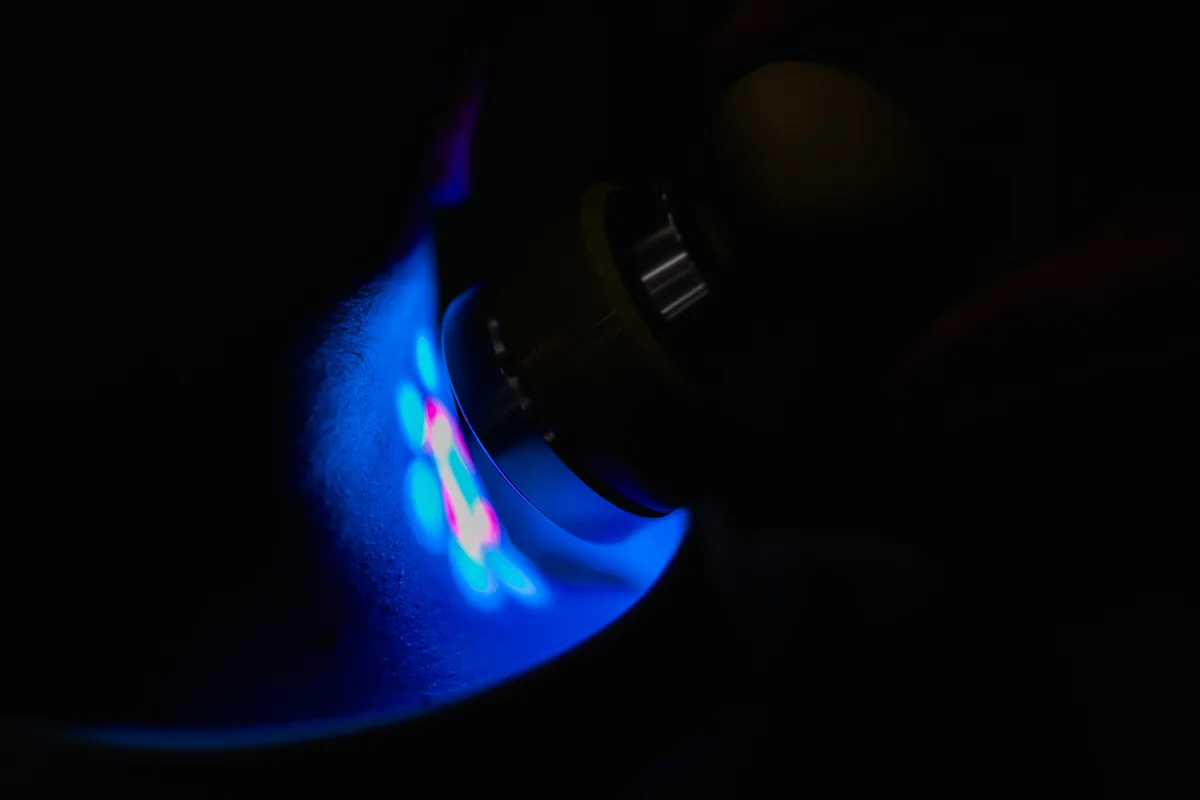
What it is
Low-level laser therapy uses specific wavelengths of light to stimulate cellular function in target tissues. The mechanism — photobiomodulation — supports mitochondrial activity, reduces inflammation, and accelerates the body's natural healing process.
How it works
A handheld laser device is applied to the treatment area for several minutes per zone. There is no heat sensation; some patients feel a mild warmth. The therapy is painless.
Who it is for
- Slipped disc and sciatica (alongside decompression)
- Tendinopathies and soft tissue injury
- Neuropathy
- Post-surgical recovery
- Chronic inflammatory conditions
Contraindications + honest screening
Direct treatment over active malignancy, areas of pregnancy abdomen, or in patients on certain photosensitising medications. The clinician confirms safety before each course.
What a session looks like
Each session takes 15–20 minutes. LLLT is typically used in combination with other modalities — manual therapy, decompression, or rehabilitative exercise — to support tissue healing alongside structural correction.
Typical treatment arc
6–12 sessions over the active treatment phase.
Where this service fits
- Low-level laser therapy (LLLT) is one component of the broader Functional Correction Method — used in isolation only where a multi-modal plan is not clinically indicated.
- Each session is preceded by a brief reassessment so the treatment evolves with the patient.
- If this modality is not the right fit for your condition, we will say so at the first consultation.
Common questions.
Our patient-care team is happy to walk through anything else over the phone or WhatsApp.
Also known as cold laser therapy or photobiomodulation, low level laser therapy in Singapore is a treatment that uses certain wavelengths of light to activate the body’s tissues. Low level laser therapy is applied using a handheld device. Typically, the applicators will range in coverage from the size of a fingertip to approximately the size of a fist. The applicator emits non-thermal protons of light which penetrate through the skin to the tissue up to 2 to 5 centimetres below. Wavelengths between 600-1050nm are usually used in treatment, at a power of up to 1,500mW in low-level laser systems.
You’ve tried adjustments, massage, exercises, and while they’ve helped, you’re still dealing with persistent pain or inflammation that’s slowing your recovery. Maybe it’s chronic knee pain that flares up every few months, stubborn tendonitis that won’t fully heal, or lingering discomfort from an old injury. What if there was a non-invasive, drug-free way to accelerate your healing and reduce pain at the cellular level? That’s where low-level laser therapy (LLLT) comes in. This FDA-cleared treatment uses specific wavelengths of light to stimulate your body’s natural healing processes, reducing inflammation, relieving pain, and speeding up tissue repair.
Think of LLLT as giving your cells a boost of energy to heal themselves more effectively. And the best part? It’s completely painless, most patients describe it as feeling like nothing at all, or perhaps a gentle warmth.
When the light energy passes through skin and to the area being targeted, the cell’s light sensitive elements absorb and interact with it. The cells react in a process analogous with photosynthesis in plants, where sunlight is absorbed and converted into usable energy to help them grow. The body’s cells are activated by light energy. Research on cold laser therapy over the past two decades suggests it may help reduce inflammation and swelling, support wound healing, and provide pain relief in certain musculoskeletal conditions. Individual responses to treatment vary. The therapy is also known for increasing intracellular metabolism by regulation of ATP synthesis. This results in a notable reduction in healing time.
To undertake this treatment, the practitioner will place the applicator over the treatment area for 30 seconds to up to a few minutes. How long you are treated depends on the dose being applied and the area being treated. Ultimately, handheld laser therapy can be helpful for patients suffering from a variety of acute and chronic conditions. It is known to help reduce swelling and pain, reduce spasms and increase functionality.
Given that there are a variety of handheld laser devices available on the consumer market, you may be wondering what advantages there are to going to a professional. Here’s a comparison of what professionals offer over consumer products:
Practicality: Consumer models are portable and handheld for use at home. Professionals such as doctors, cosmetic specialists or physiotherapists administer professional cold therapy treatment.
Equipment: Consumer models are designed to treat small areas and may use LEDs rather than lasers. Professionals use more advanced, high powered and multi-wavelength devices designed to treat complex conditions.
Purpose: Consumer models can be used for smaller areas of treatment of up to 1-2 cm. They can be useful for treating arthritis, tinnitus, or skin issues. Professional treatment can be used to treat a variety of medical conditions including chronic and acute pain, nerve regeneration, inflammation and tissue repair.
Low level laser therapy in Singapore has a number of beneficial impacts on the body. These include:
Cellular Energy Boost: LLLT improves cellular function and accelerates healing by activating mitochondria to enhance ATP (energy) production.
Reduced Inflammatory Mediators: Low level laser therapy decreases the production of inflammatory substances such as PGE2, histamine, bradykinin, and cytokines (TNF-α, IL-1β). These are key in the inflammatory process.
Improved Circulation: LLLT generates blood flow and oxygenation in the affected area, helping to speed up healing and remove inflammatory debris.
Enhanced Lymphatic Drainage: LLLT helps to reduce swelling and oedema (swelling) by increasing lymphatic drainage.
Stimulation of Nerve Function: LLLT can lead to pain relief and a decreased pain threshold. This is because it reduces the release of substance P, a neurotransmitter associated with pain, and increases endorphins.
Modulation of Gene Expression: It can modulate transcription factors like NF-κB, which is involved in inflammatory gene expression, further dampening the inflammatory response.
Cold laser therapy has a wide variety of exceptional therapeutic benefits. These benefits include:
- Rapid Cellular Repair: May help accelerate healing: Research suggests LLLT can increase cellular energy production, potentially supporting faster tissue repair.
- Reduced Formation of Fibrous Tissue: Laser light results in more complete healing and significantly reduces scar tissue formation. This also means there is a minimal chance for weakness and re-injury.
- Anti-inflammatory Action: Laser light has been known to decrease pain, reduce swelling and stiffness, and facilitate faster return of normal muscle and joint function.
- Faster Healing of Wounds: Laser light helps heal damaged tissues and stimulate fibroblast development through accelerating collagen synthesis. Therefore, patients who are post-surgery or post-injury may benefit from low level laser therapy as part of their recovery.
- Stimulates Nerve Function: Laser light can result in decreased numbness and pain for those with nerve-related conditions due to speeding up the nerve cell processes.
Low level laser can stimulate all cell types – including muscle, cartilage, nerves and ligaments – so it is fantastic for a variety of conditions. LLLT may be beneficial as part of a comprehensive treatment plan for various conditions, including:
- Back pain
- Neck pain
- Arthritis pain
- Disc injuries
- Carpal tunnel syndrome
- Neuropathic pain (nerve pain)
- Knee pain
- Frozen shoulder or shoulder pain
- Tendonitis
- Fibromyalgia pain
*The effectiveness of LLLT varies by condition, individual patient factors, and severity. During your consultation, we’ll assess whether this treatment is appropriate for your specific situation.
Cold laser treatments are also beneficial for use with acute injuries due to their ability to reduce the inflammatory response.
Many clinics in Singapore now offer laser therapy, but at Elite Spine Centres, we take a different approach:
Integrated Treatment: We don’t just point a laser at your pain and hope for the best. Our chiropractors assess your overall biomechanics and movement patterns to understand the root cause of your condition. LLLT is combined with chiropractic adjustments, soft tissue therapy, and rehabilitation for comprehensive healing.
Professional-Grade Equipment: We use advanced, high-powered multi-wavelength laser systems, not consumer-grade devices. This allows us to treat deeper tissues and more complex conditions effectively.
Experienced Practitioners: Our team is trained in proper laser application protocols, including appropriate dosing, treatment duration, and which wavelengths work best for specific conditions.
Evidence-Based Approach: We stay current with the latest research on LLLT and only recommend it for conditions where evidence supports its use.
Personalized Treatment Plans: We assess whether LLLT is appropriate for your specific condition. If it’s not the right fit, we’ll recommend alternatives that may be more effective.
Comprehensive Follow-Up: Your treatment doesn’t end when the laser session is over. We monitor your progress, adjust treatment as needed, and provide exercises and lifestyle advice to maintain your improvements.
At Elite Spine Centres, we don’t use LLLT in isolation. It’s one of several advanced technologies we integrate with our chiropractic care, soft tissue therapy, and rehabilitation programs. This combined approach gives you the best chance of achieving lasting relief and faster recovery.
If you have acute or chronic pain or injuries and you think you might be a candidate for low level laser therapy, why not come and visit us for an initial consultation? We will perform a full body examination to get to the root of your pain. We will then recommend a comprehensive, tailored treatment plan designed to address your specific condition and support your recovery.
Speak to a clinician about what is causing your pain.
Your first visit is a 60-minute session with a doctor — a full assessment and your first treatment in the same appointment. We take your clinical history, screen your posture and movement, explain what we find in plain language, and begin treatment if your condition is suitable for our care.